New
Normal
2014—Present
Photography Series, Archive
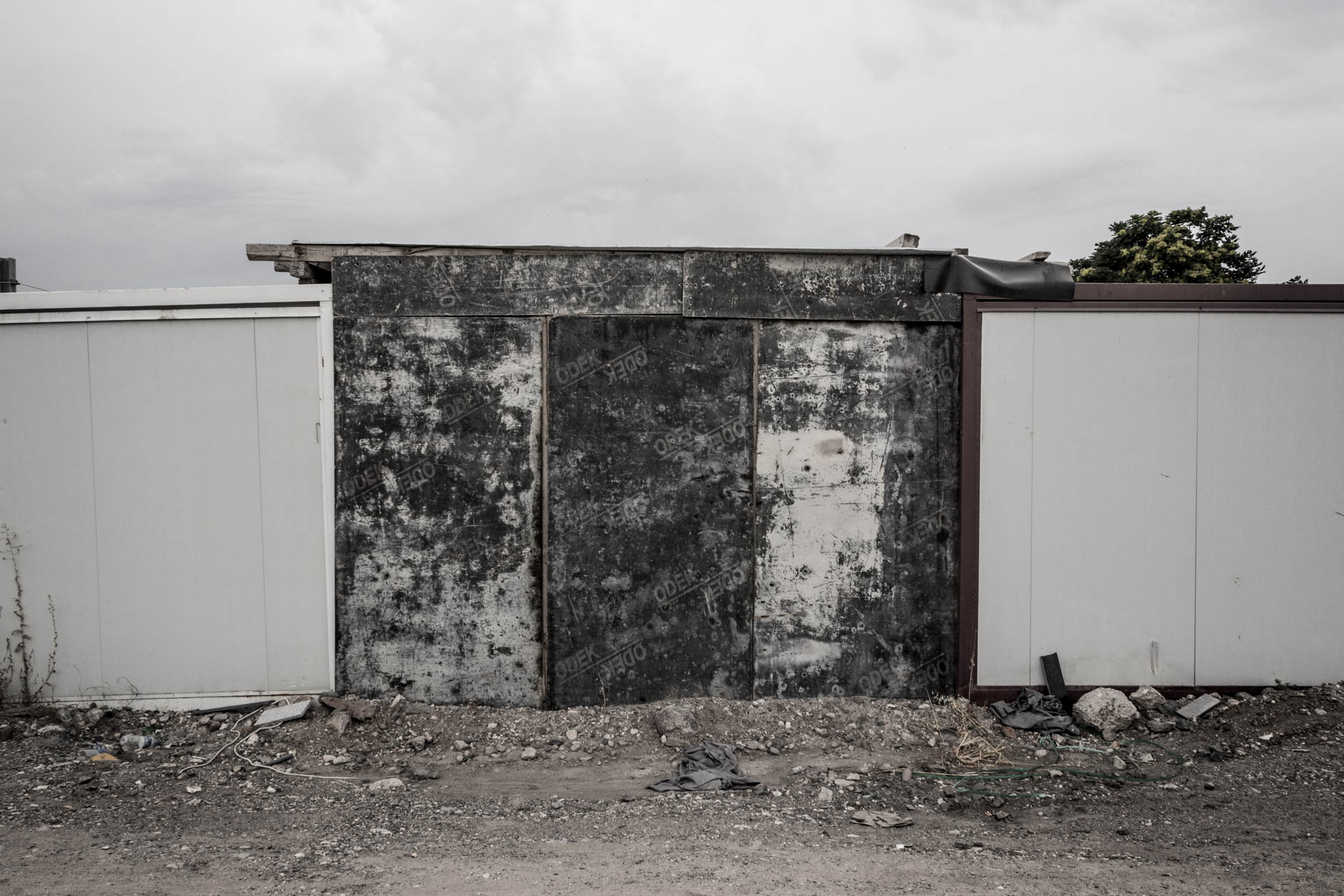
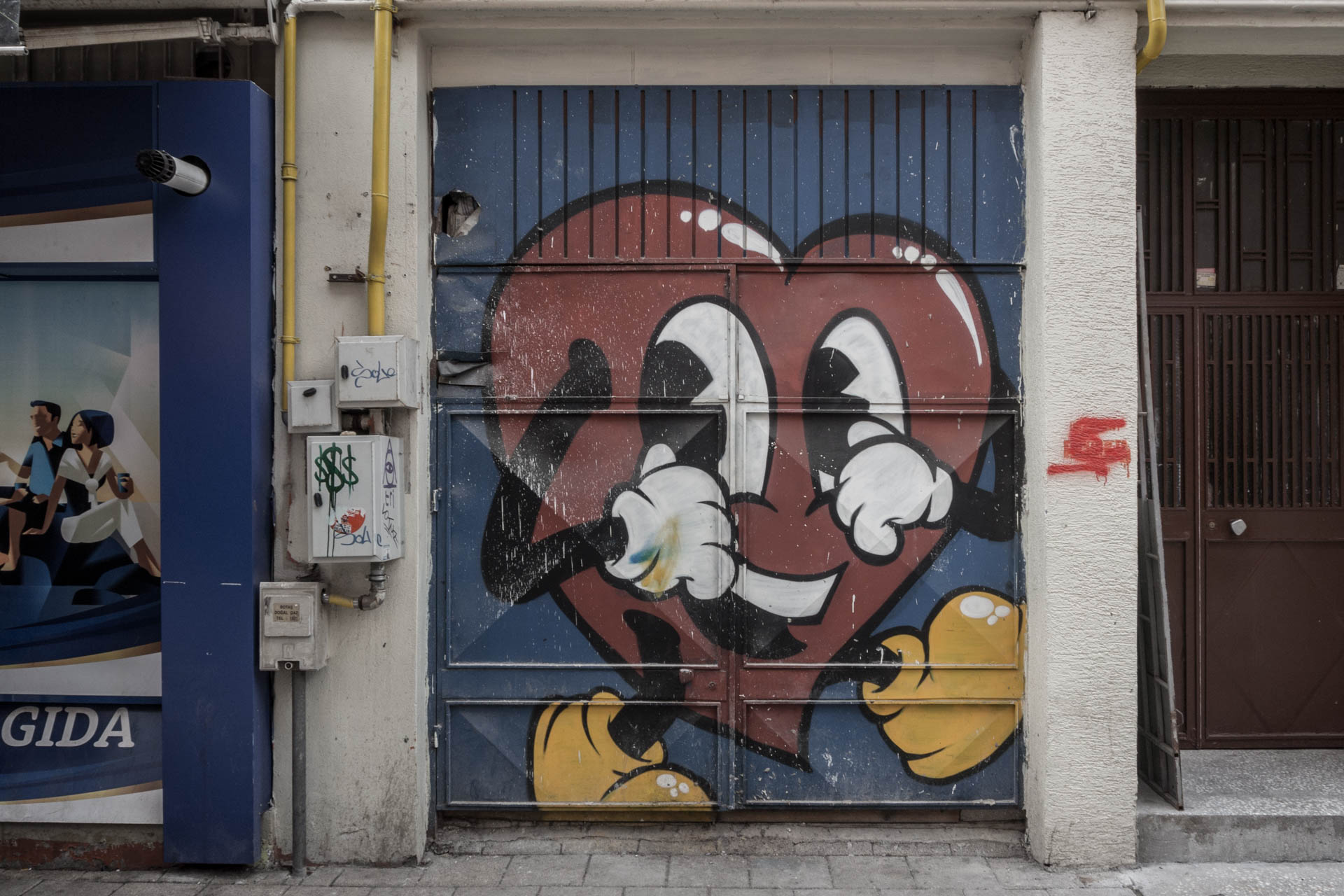
New Normal (2014—Present) project emerged from a desire to document Turkey’s transforming visual reality through local urban explorations. Over time, it expanded to encompass Istanbul, Izmir, and Eskisehir. Produced across various cities, the photographs focus on discarded materials, construction sites, in-between spaces, and unexpected encounters on the street. The walking-based methodology which explores suburbs and peripheries functions like a laboratory practice, aiming to render the unseen stories of the urban context visible.
The research looks at how these three large cities, which have different cultures, climates, and economic realities, can share similarities in their outward appearances. The series uses digital photography to archive these similarities and develop a new proposal for classification directed toward a possible future.
As the subject was examined in depth, it became apparent that this phenomenon was not limited merely to a local issue but was rather part of a global context: construction and infrastructure initiatives shaped by neoliberal policies gained momentum in many countries around the world during the first decade of the 21st century. The restructuring process of Third World economies initiated by the IMF in the 1980s transformed into a massive wave of construction engulfing cities at the threshold of the 21st century.¹ This worldwide transformation also encompassed Turkey, altering its cities on an unprecedented scale.
In contrast to the glass and steel buildings envisioned by earlier generations of urbanists, Mike Davis notes that Third World cities, shaped by the influence of the neoliberal construction wave, are essentially built from rough brick, straw, recycled plastic, concrete blocks, corrugated iron, and scrap wood.² Adopting a similar perspective, this project is founded upon the concept of the “urban majority” and, drawing from direct observations in the immediate urban environment, suggests that the future may be built from second-rate materials.
However, a situation arises here that diverges from Mike Davis’s observations, which are based primarily on research in the African continent: the urban development observed in Turkey manifests itself not so much through an urban growth emerging from rejected or residual materials, but rather through architectural mediocrity, poor quality, and monotony. This study, which focuses on the negative aspects of the city, documents the destruction caused by the brutal demolition of former structures and the mediocrity that replaced them. This form, which was previously described as mediocrity, poor quality, and monotony, quickly overflows beyond the areas initially assigned to it, now directly expanding the domain of the skyscrapers, while shining skyscrapers, which cannot be ignored as part of the urban transformation that Turkish cities are experiencing today, rise before us.
The photographing of these spaces was a conscious choice. However, it becomes clear that heading toward scenes with no human presence was a semi-conscious decision. The absence of human bodies emphasizes and exaggerates the similarities between these spaces.
In this respect, the method of the study is grounded, to a certain extent, in geographical and visual anthropology. The visual anthropological record devoid of the human subject is a novel phenomenon and is also closely related to the historical style of New Topographics aesthetics, a movement from the 1970s that approaches mundane, human-altered environments with a strictly objective and unromanticized gaze. Therefore, it represents a distanced art form wherein the artist simply records something that might initially appear flat or uninteresting exactly as it is. Although capturing urban scenes devoid of human presence seems to align with the principles of deadpan photography, such an identification remains problematic for this study. This is because deadpan photography, as an artistic style, ties into a tradition that leads us back to pictorialism—an approach that emphasizes the positioning of the photograph as an object and the photographer, as well as the allure of the subject, tonality, and composition, rather than factual documentation. For instance, Andreas Gursky’s works from the 1990s present themselves as if produced to be hung on a museum wall, due to their scale and technical perfection.³ This study, conversely, was not designed as an artwork to be placed on a museum wall; rather, its presentation was conceived in a book format. In this regard, the artistic approach of the project appears to align more closely with the muckraking journalism practice of Lewis Hine in the 1930s or Roger Fenton’s in the 1850s.
As a result of urban policies and legal regulations regarding urban spaces in Turkey, a specific type of cityscape has been created. The project examines the grammar of this new urban visual language. The New Normal is an ironic title for the project, pointing not to the abnormal, but rather to the other face of normality; it signifies an acclimatization and a surrender to a new state of mind characterized by the chaotic density dominating the city and a pervasive cynicism. This familiarity is evident in one of the project’s earliest photographs, titled “New Normal #582. A column fragment found during the excavations of the ancient city of Agora. Izmir. 2014.” The photograph questions the parallel histories of urban excavation by centering on an encounter in today’s metropolis with a column fragment unearthed from an ancient city. At the center of the composition lies a column fragment, one of the fundamental forms of the Ancient Greek construction system, while a settlement is situated in the background. The relationship between this column fragment and the background serves as an analogy for the proximity between archaeological status and the urban condition.
“New Normal #1524. A protective wall of a skyscraper construction on Islam Karimov Avenue. Izmir. 2015.” is an image that clearly shows the strategy adopted in the project. Taken during an urban exploration conducted in Izmir, this photograph presents the almost invisible reality of the construction site on the one hand, and the 3D visualization of the projected building via a vinyl print placed over the enclosure on the other. The image gives an idea about the position of the photographer, who hits a barrier and experiences the sensation of being excluded from the site. Consequently, it produces an effect of disorientation coming from being caught in-between the capitalist desire for ownership and the current de facto reality of the construction. Another significant image from the series is the work titled “New Normal #2794. Reinforced concrete paneled retaining wall commonly used in intersection construction under Ankara Avenue. Izmir. 2017.” This photograph renders visible the pattern of a retaining wall and one of the fundamental elements of infrastructure. Such a pattern is a constituent of the new grammar observable everywhere in Turkey over the last decade.
In this study, captioning has been adopted as a strategy. The photographs are titled with descriptive meta-information regarding the object’s location and its relationship with the background. Alongside metadata comprising various elements such as GPS coordinates, exact time data, and other EXIF data obtained from the camera, these also include the photographer’s position and description. However, this titling system is not identical for every image: while some images contain information related to the background, others solely point to the specific characteristics of the object itself. Thus, the image is not only described in a cold and scientific tone but is also attached with a personal note.
The New Normal project began as a result of a personal need to explore the urban environment through the eyes of its inhabitants. Over time, the project evolved into a personal archive that grew exponentially, encompassing research on urban policies, visual anthropology, and ways of engaging with space.
Through this project, I aimed to build a perspective that would accurately reflect the reality of the world I live in, which is often presented in various ways by dominant discourses. The study was originally only intended to be a straightforward method of urban exploration, but over time, it took on a far wider scope than expected. Today, the archive consists of more than 10,000 images, continues to grow, and has gradually expanded into an archive connected to broader questions around urban transformation. In light of current political developments and destructive policies, these images can be evaluated as a potential set of signs announcing the end of the era we are currently inhabiting.
¹ ² Mike Davis (2007). Planet of Slums. London: Verso.
³ Julian Stallabrass (2004). Art Incorporated: The Story of Contemporary Art. Oxford: Oxford University Press.
Yeni Normal (2014—devam ediyor) projesi, Türkiye’nin dönüşen görsel gerçekliğini yerel kentsel keşifler aracılığıyla belgeleme arzusundan ortaya çıktı. Zaman içinde İstanbul, İzmir ve Eskişehir’i kapsayacak biçimde genişledi. Farklı şehirlerde üretilen fotoğraflar; atık malzemelere, inşaat alanlarına, ara mekânlara ve sokakta karşılaşılan beklenmedik durumlara odaklanır. Kentin banliyölerini ve çeperlerini araştıran yürüme temelli yöntem, bir laboratuvar pratiği gibi işleyerek kentsel bağlamın görünmeyen hikâyelerini görünür kılmayı amaçlar.
Araştırma, farklı kültürlere, iklimlere ve ekonomik gerçekliklere sahip bu üç büyük şehrin dış görünüşleri bakımından nasıl benzerlikler taşıyabildiğini inceler. Seri, bu benzerlikleri arşivlemek ve olası bir geleceğe yönelen yeni bir sınıflandırma önerisi geliştirmek için dijital fotoğrafı kullanır.
Konu derinlemesine incelendikçe, bu olgunun yalnızca yerel bir meseleyle sınırlı olmadığı, daha geniş bir küresel bağlamın parçası olduğu belirginleşti: 21. yüzyılın ilk on yılında, neoliberal politikalarla şekillenen inşaat ve altyapı girişimleri dünyanın birçok ülkesinde ivme kazandı. 1980’lerde IMF tarafından başlatılan Üçüncü Dünya ekonomilerinin yeniden yapılandırılması süreci, 21. yüzyılın eşiğinde kentleri kuşatan büyük bir inşaat dalgasına dönüştü.¹ Bu dünya ölçeğindeki dönüşüm Türkiye’yi de içine alarak şehirlerini daha önce görülmemiş bir ölçekte değiştirdi.
Mike Davis, önceki kuşak şehir plancılarının öngördüğü cam ve çelik yapılardan farklı olarak, neoliberal inşaat dalgasının etkisiyle şekillenen Üçüncü Dünya kentlerinin esasen kaba tuğla, saman, geri dönüştürülmüş plastik, beton bloklar, oluklu saç ve hurda ahşaptan inşa edildiğini belirtir.² Benzer bir bakış açısını benimseyen bu proje, “kentsel çoğunluk” kavramından hareket eder ve yakın kentsel çevredeki doğrudan gözlemlere dayanarak geleceğin ikinci sınıf malzemelerle kurulabileceğini öne sürer.
Ancak burada, Mike Davis’in büyük ölçüde Afrika kıtasına dayanan araştırmalarından ayrılan bir durum ortaya çıkar: Türkiye’de gözlemlenen kentsel gelişim, reddedilmiş ya da artık malzemelerden doğan bir kentsel büyümeden ziyade, mimari vasatlık, niteliksizlik ve tekdüzelik üzerinden kendini gösterir. Kentin olumsuz yönlerine odaklanan bu çalışma, eski yapıların sert biçimde yıkılmasıyla ortaya çıkan tahribatı ve bu tahribatın yerine geçen vasatlığı belgeler. Daha önce vasatlık, niteliksizlik ve tekdüzelik olarak tarif edilen bu biçim, kısa sürede kendisine ayrılmış alanların dışına taşarak artık doğrudan gökdelenlerin hâkimiyet alanını genişletir; Türkiye şehirlerinin bugün deneyimlediği kentsel dönüşümün göz ardı edilemeyecek parçalarından biri olan parlak gökdelenler ise karşımıza yükselmeye devam eder.
Bu mekânların fotoğraflanması bilinçli bir tercihti. Buna karşılık, insan varlığının bulunmadığı sahnelere yönelmenin yarı bilinçli bir karar olduğu zamanla daha açık hâle geldi. İnsan bedenlerinin yokluğu, bu mekânlar arasındaki benzerlikleri vurgular ve abartır.
Bu açıdan çalışmanın yöntemi, belirli ölçüde coğrafya ve görsel antropolojiye dayanır. İnsan öznesinden arındırılmış görsel antropolojik kayıt görece yeni bir olgudur ve aynı zamanda 1970’lerde ortaya çıkan, insan eliyle değiştirilmiş sıradan çevrelere katı biçimde nesnel ve romantize edilmemiş bir bakışla yaklaşan New Topographics estetiğinin tarihsel üslubuyla yakından ilişkilidir. Dolayısıyla burada, sanatçının ilk bakışta düz ya da ilgi çekici görünmeyebilecek bir şeyi olduğu gibi kaydettiği mesafeli bir sanat formu söz konusudur. İnsan varlığından arındırılmış kent sahnelerini fotoğraflamak deadpan fotoğrafın ilkeleriyle ilişkili görünse de, bu özdeşleştirme bu çalışma açısından sorunludur. Çünkü deadpan fotoğraf, sanatsal bir üslup olarak, bizi piktoryalizme kadar götüren bir geleneğe bağlanır; bu gelenek, olgusal belgelemeden ziyade fotoğrafın bir nesne olarak konumlanmasını, fotoğrafçının varlığını, konunun cazibesini, tonaliteyi ve kompozisyonu öne çıkarır. Örneğin Andreas Gursky’nin 1990’lardaki işleri, ölçekleri ve teknik kusursuzlukları nedeniyle, sanki bir müze duvarına asılmak üzere üretilmiş gibi görünür.³ Bu çalışma ise tersine, bir müze duvarına yerleştirilecek bir sanat yapıtı olarak tasarlanmamış; sunumu kitap formatı üzerinden düşünülmüştür. Bu bakımdan projenin sanatsal yaklaşımı, 1930’larda Lewis Hine’ın ya da 1850’lerde Roger Fenton’ın araştırmacı gazetecilik pratiğine daha yakın görünür.
Türkiye’de kentsel mekâna ilişkin şehircilik politikaları ve yasal düzenlemelerin sonucu olarak belirli bir kent manzarası tipi oluşmuştur. Proje, bu yeni kentsel görsel dilin gramerini inceler. Yeni Normal, proje için ironik bir başlıktır; anormal olana değil, normalliğin diğer yüzüne işaret eder. Kentte egemen olan kaotik yoğunluk ve yaygın sinizmle nitelenen yeni bir zihinsel duruma alışmayı ve teslimiyeti ifade eder. Bu aşinalık, projenin erken dönem fotoğraflarından biri olan “New Normal #582. Agora Antik Kenti kazılarında bulunan bir sütun parçası. İzmir. 2014.” başlıklı fotoğrafta belirginleşir. Fotoğraf, antik bir kentten çıkarılan bir sütun parçasıyla bugünün metropolünde karşılaşmayı merkeze alarak kentsel kazının paralel tarihlerini sorgular. Kompozisyonun merkezinde Antik Yunan yapı sisteminin temel biçimlerinden biri olan bir sütun parçası yer alırken, arka planda bir yerleşim dokusu bulunur. Sütun parçası ile arka plan arasındaki ilişki, arkeolojik statü ile kentsel durum arasındaki yakınlığa dair bir analoji kurar.
“New Normal #1524. İslam Kerimov Caddesi’nde bir gökdelen inşaatının koruyucu duvarı. İzmir. 2015.” başlıklı fotoğraf, projede benimsenen stratejiyi açık biçimde gösteren bir imgedir. İzmir’de gerçekleştirilen bir kentsel keşif sırasında çekilen bu fotoğraf, bir yandan inşaat alanının neredeyse görünmez gerçekliğini, diğer yandan çevreleme yüzeyine yerleştirilmiş vinil baskı aracılığıyla gelecekteki yapının üç boyutlu görselleştirmesini sunar. İmge, bir bariyere çarpan ve alanın dışında bırakılma hissini deneyimleyen fotoğrafçının konumuna dair fikir verir. Sonuç olarak, kapitalist mülkiyet arzusu ile inşaatın mevcut fiilî gerçekliği arasında sıkışmış olmaktan kaynaklanan bir yön kaybı etkisi üretir. Serinin bir diğer önemli imgesi ise “New Normal #2794. Ankara Caddesi altındaki kavşak inşaatlarında yaygın olarak kullanılan betonarme panelli istinat duvarı. İzmir. 2017.” başlıklı çalışmadır. Bu fotoğraf, bir istinat duvarının desenini ve altyapının temel unsurlarından birini görünür kılar. Bu tür bir desen, son on yılda Türkiye’nin hemen her yerinde gözlemlenebilen yeni gramerin kurucu öğelerinden biridir.
Bu çalışmada başlıklandırma bir strateji olarak benimsenmiştir. Fotoğraflar, nesnenin konumu ve arka planla ilişkisine dair betimleyici meta-bilgilerle adlandırılır. Bu başlıklar; kameradan elde edilen GPS koordinatları, kesin zaman bilgisi ve diğer EXIF verileri gibi çeşitli unsurları içeren metadata ile birlikte fotoğrafçının konumunu ve açıklamasını da içerir. Ancak bu başlıklandırma sistemi her imge için aynı değildir: bazı imgeler arka plana ilişkin bilgiler içerirken, bazıları yalnızca nesnenin belirli özelliklerine işaret eder. Böylece imge yalnızca soğuk ve bilimsel bir tonla tanımlanmaz; aynı zamanda kişisel bir notla da ilişkilendirilir.
Yeni Normal projesi, kentsel çevreyi sakinlerinin gözünden araştırmaya yönelik kişisel bir ihtiyaçtan doğdu. Zaman içinde proje, kentsel politikalar, görsel antropoloji ve mekânla ilişki kurma biçimleri üzerine yürütülen araştırmaları kapsayan ve giderek büyüyen kişisel bir arşive dönüştü.
Bu proje aracılığıyla, içinde yaşadığım dünyanın hâkim söylemler tarafından çeşitli biçimlerde sunulan gerçekliğini daha doğru biçimde yansıtabilecek bir bakış açısı kurmayı amaçladım. Çalışma başlangıçta yalnızca doğrudan bir kentsel keşif yöntemi olarak düşünülmüştü; ancak zamanla beklenenden çok daha geniş bir kapsama ulaştı. Bugün arşiv 10.000’den fazla imgeden oluşmakta, büyümeye devam etmekte ve kentsel dönüşüm etrafındaki daha geniş sorularla bağlantılı bir arşive doğru genişlemektedir. Güncel politik gelişmeler ve yıkıcı politikalar ışığında, bu imgeler içinde yaşadığımız dönemin sonunu haber veren potansiyel bir göstergeler dizisi olarak değerlendirilebilir.
¹ ² Mike Davis (2007). Planet of Slums. London: Verso.
³ Julian Stallabrass (2004). Art Incorporated: The Story of Contemporary Art. Oxford: Oxford University Press.